1964 to 1971
The American Place Theatre
From Robert Lowell’s The Old Glory to Sam Shepard’s La Turista and Cowboy Mouth.


Nearly two hundred years
of worship, theater and service,
from a Greenwich Village side street
to Hell’s Kitchen.
This history begins with Jim Ashcraft’s
“A Brief History of St. Clement’s,”
the parish’s first full account of itself.
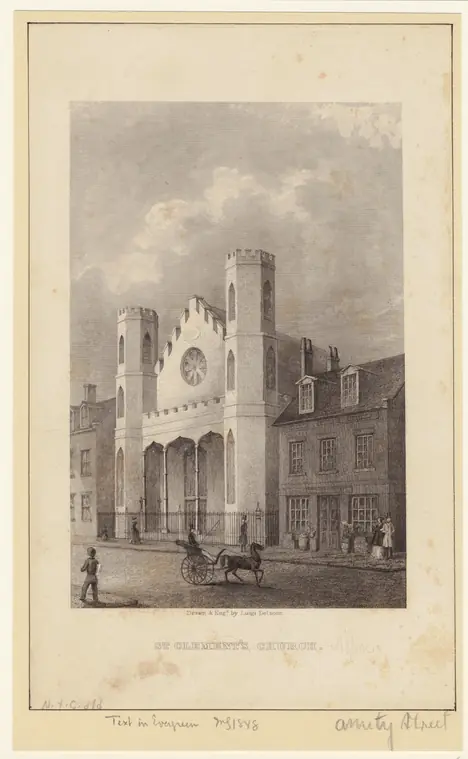
1830 to 1910
St. Clement’s began in the summer of 1830 with about thirty people
meeting in a hall on Barrow Street in Greenwich Village.
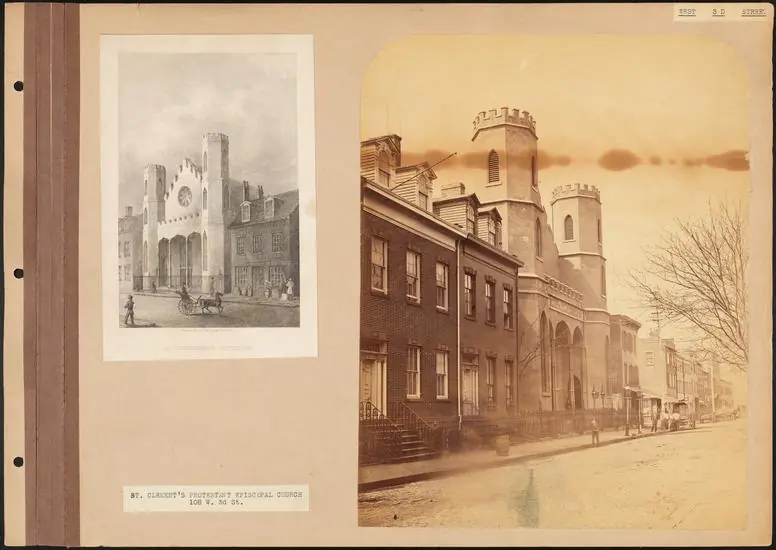
Within a year they had built a Gothic church at 108 Amity Street,
just south of Washington Square, consecrated on May 5, 1831.
The Rev. Theodore Eaton led the parish for about 42 years,
the longest rectorship in its history. He watched the wealthy families
who had built St. Clement’s move uptown, and new neighbors arrive:
Irish, German, French and African American families,
and later Italian immigrants by the thousands.
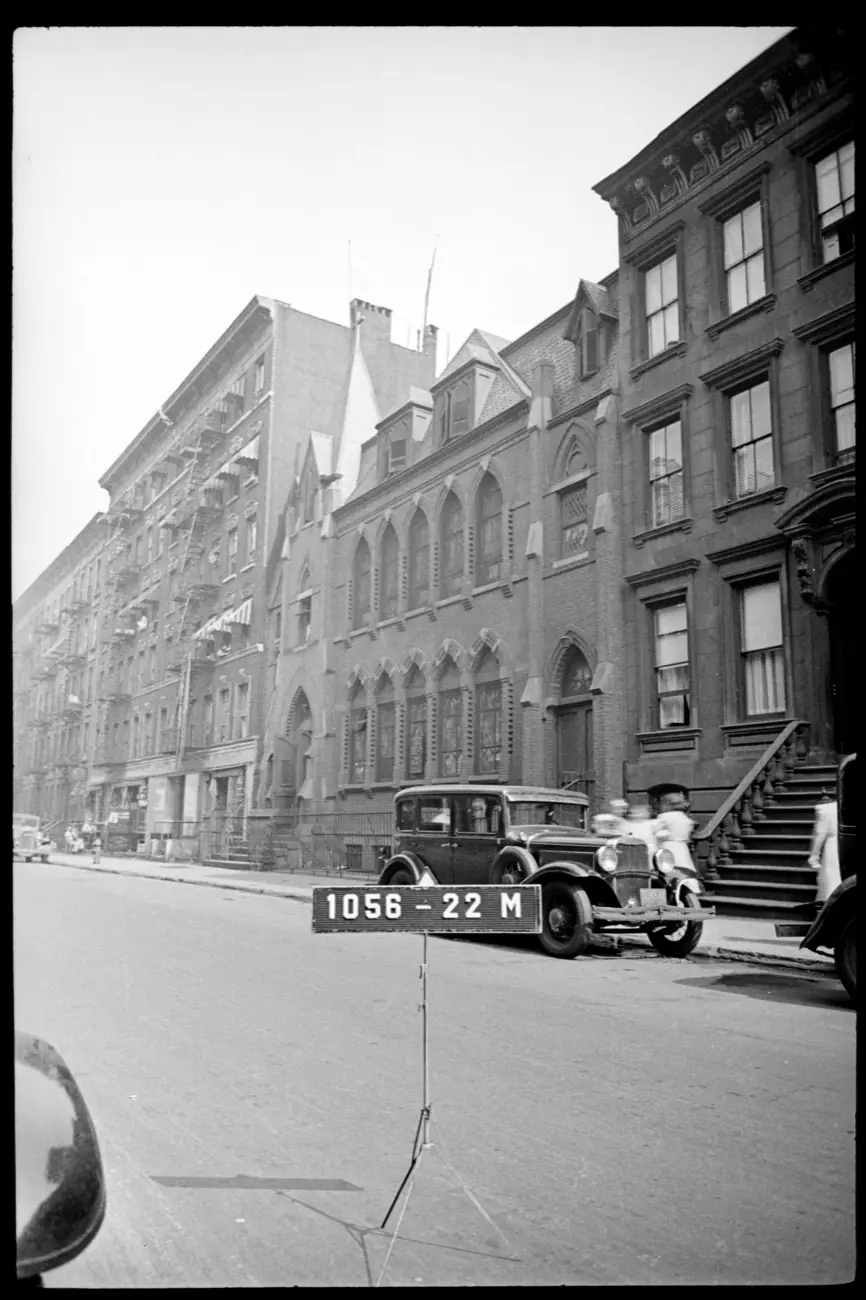
On May 13, 1910, the city declared the old church unsafe.
The congregation held its last services there that morning,
and the building came down that year.
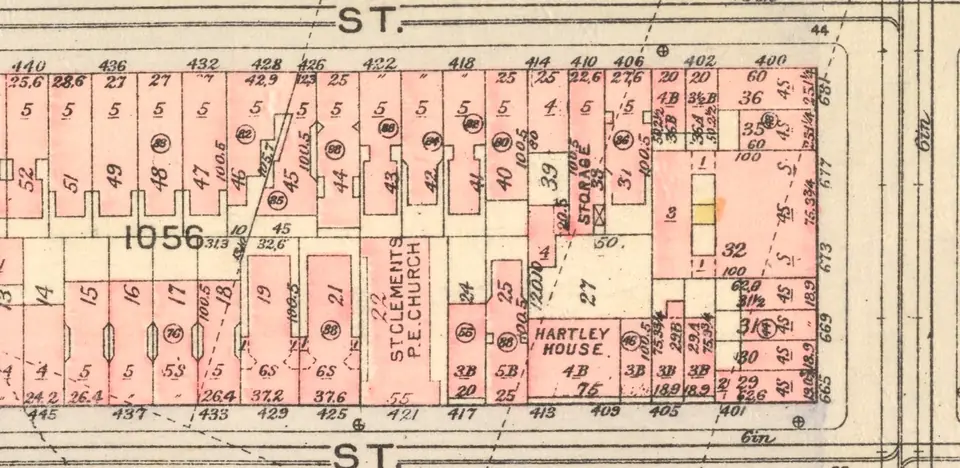
Lot 22, “St. Clement’s P.E. Church,” in the 1925 Bromley atlas. G. W. Bromley and Co., The New York Public Library Map Division
1910 to 1960
The parish kept going anyway. For five years it worshiped in the Diocesan House on Lafayette Street, then in rooms at 136 West Third Street.
In June 1920 St. Clement’s bought the church of St. Cornelius at 423 West 46th Street, and the two congregations became one.
In 1924 the people of Trinity Parish’s Chapel of St. Chrysostom joined them.
The theater was close from the start: in 1929 the parish hall hosted an Epiphany pageant and a play staged with the Episcopal Actors’ Guild.
In the decades that followed, the congregation dwindled. By 1956 the church was open only on Sundays.
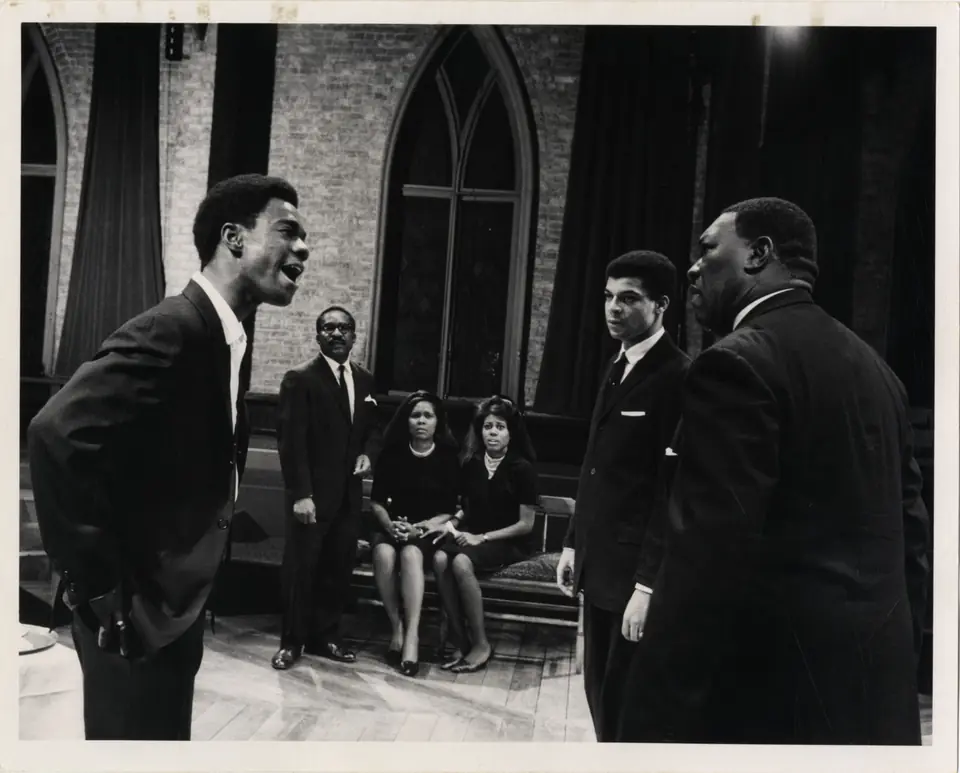
The sanctuary as a theater, 1966: a scene from Ronald Milner’s Who’s Got His Own,
with Glynn Turman, Barbara Ann Teer and Roger Robinson.
Martha Holmes for the American Place Theatre. Detroit Public Library, E. Azalia Hackley Collection
1962 to 1975
“A communion”
The Rev. Sidney Lanier, on the theater in the sanctuary
between
the church
and the world.
With six to eight people at Sunday Mass, the Rev. Sidney Lanier proposed a marriage of church and theater. The pews came out, the rafters were rigged for lights, and on November 1, 1964, Robert Lowell’s The Old Glory opened in the sanctuary.
Not every neighbor approved: in 1969 vandals threw a firebomb through a window. The theater stayed, and so did the Sunday Mass in the Theatre, with the altar set on whatever stage the current show had built.
1975 to 2002
The Rev. Martha Blacklock, the parish’s first woman vicar,
began the tradition of food and feeding that runs through everything we do.
The Rev. Barbara Crafton, priest, writer and actress, brought animals to worship,
a free veterinary clinic, and a ministry at Ground Zero after September 11.
1982
Poppie Nongena,
a South African play,
comes to our stage.
1986
The Food Pantry opens.
1990
Under the Rev. Kathleen Mandeville
the parish founded the Clinton Peer
AIDS Education Coalition.
1992
St. Clement’s is a parish again.
1997
Broadway Blessing begins.
1964 to today
1964 to 1971
From Robert Lowell’s The Old Glory to Sam Shepard’s La Turista and Cowboy Mouth.
The 1970s
Terrence McNally’s Whiskey (1973), and the New York premiere of David Mamet’s American Buffalo in January 1976.
The 1980s
Martha Clarke’s The Garden of Earthly Delights (1984, Drama Desk) and Julie Taymor and Elliot Goldenthal’s Juan Darién (1988).
1992 to 1998
Shakespeare for New York: Mark Rylance’s Henry V (1993, Lortel Award) and Julie Taymor’s Titus Andronicus (1994).
1999 to 2003, and 2026
Here at the turn of the century, and back in 2026, with The Adding Machine and Rope.
2005 to 2025
American plays rediscovered, from Elmer Rice’s Counsellor-at-Law (2005, Lortel and Obie) to Ceremonies in Dark Old Men with the Negro Ensemble Company (2025).
134 productions, 1964 to 2026
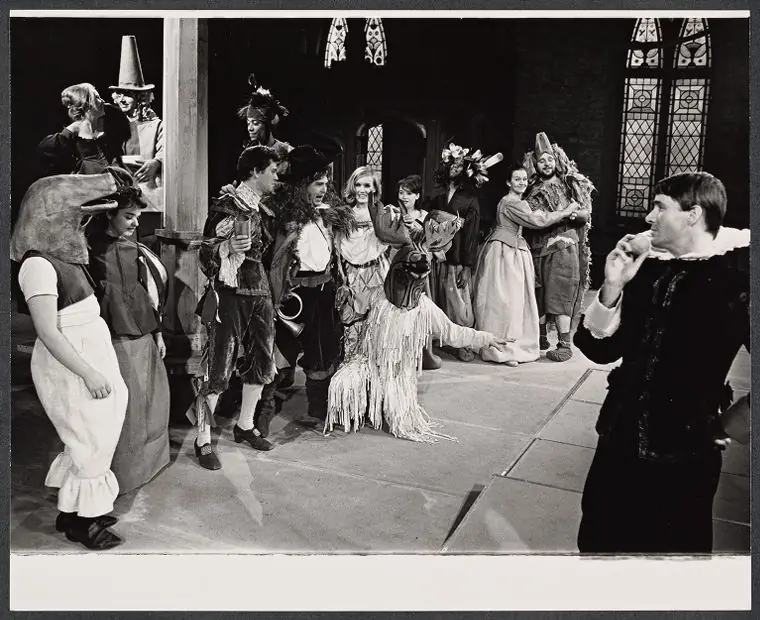
From the Off-Broadway archive’s listings for 423 West 46th Street, the companies’ own records, and the NYPL theater collection. Some years are missing from the record; if you know a show that played here, tell us.
Today
The Food Pantry now serves about 3,000 neighbors a month.
In 2023 we marked sixty years as a church and a theater.
We are still the congregation that has always celebrated
the ministry of women, of gay and lesbian people,
and of people from all walks of life.